logo

EVLINK Electronic Co.,Ltd 13004587611@evptc.com 86-130-04587611

About Us
Why Choose Us
View More
EVLINK Electronic Co.,Ltd

HIGH QUALITY

Trust Seal, Credit Check, RoSH and Supplier Capability Assessment. company has strictly quality control system and professional test lab.
EVLINK Electronic Co.,Ltd

DEVELOPMENT

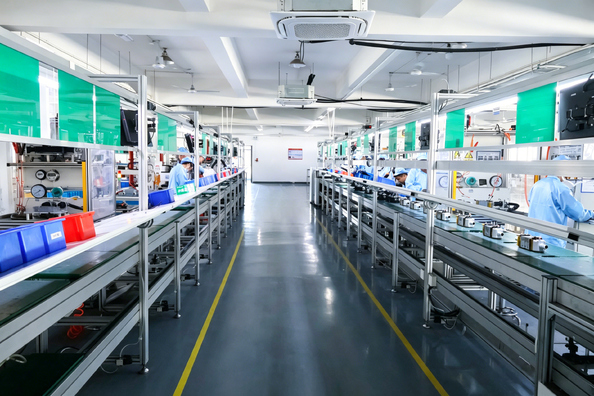
Internal professional design team and advanced machinery workshop. We can cooperate to develop the products you need.
EVLINK Electronic Co.,Ltd

MANUFACTURING

Advanced automatic machines, strictly process control system. We can manufacture all the Electrical terminals beyond your demand.
EVLINK Electronic Co.,Ltd

100% SERVICE

Bulk and customized small packaging, FOB, CIF, DDU and DDP. Let us help you find the best solution for all your concerns.

2017

Year Established

100+

Employees

+

Customers Served

30000000+

Annual Sales

Our Products

Featured Products

China EVLINK Electronic Co.,Ltd
Contact Us
Contact at Any Time
Send

EVLINK Electronic Co.,Ltd

Address: Building 5, No. 1299 Fuchunjiang Road, Kunshan Development Zone, Kunshan City, Suzhou City, Jiangsu Province
Fax: 86-130-04587611
Phone: 86-130-04587611
Our Products
Top Products
Our Cases
Recent Industrial Projects
Event
Our Latest News
Lastest company news about The Future of EV Heating: Integrated Thermal Modules and New Materials
The Future of EV Heating: Integrated Thermal Modules and New Materials
The Future of EV Heating: Integrated Thermal Modules and New Materials SEO Keywords: Integrated Thermal Management Module, ITMM, Gallium Nitride GaN heater, future EV technology, sustainable automotive materials, 2030 EV trends. H1: Beyond the Component: The Future of High Voltage Heating Technology As we look toward 2030, the standalone High Voltage Coolant Heater is evolving. The drive for compact, lightweight, and ultra-efficient electric vehicles is pushing the industry toward high levels of integration and new material sciences. For decision-makers and R&D engineers, this is a glimpse into the next generation of thermal management. H2: The Rise of the Integrated Thermal Management Module (ITMM) Currently, an EV has a heater, a pump, three or four valves, and meters of rubber hose connecting them. This is heavy and hard to assemble. The "One-Box" Solution: The future is the ITMM. This device combines the High Voltage Coolant Heater, the electric water pump, and the multi-way valves into a single, compact manifold unit. Benefits: This eliminates hoses, reduces coolant volume (weight), minimizes pressure drop, and simplifies the vehicle assembly line to a "plug-and-play" operation. Sourcing Shift: Procurement will shift from buying separate heaters and pumps to buying complete "Thermal Engines." H2: Material Innovation: GaN (Gallium Nitride) While Silicon Carbide (SiC) is the current premium standard, Gallium Nitride (GaN) is on the horizon for heater electronics. Why GaN? It allows for even faster switching frequencies than SiC, enabling the use of smaller capacitors and inductors. This could reduce the physical size of the heater's electronics compartment by 30%. Film Heaters: We are also seeing a move away from PTC stones toward "Thick Film" technology printed directly onto the heat exchanger. This offers faster response times and lower weight, though durability validation is still ongoing. H2: Sustainability and Recycling The "Green" vehicle must be green all the way through. Recyclability: Current High Voltage Water Heaters are potted with epoxy resins that make them hard to recycle. New "Design for Disassembly" regulations are pushing manufacturers to use mechanical fasteners and non-permanent potting gels so that the copper and aluminum can be recovered at the vehicle's end of life. Carbon Footprint: B2B buyers are increasingly asking for the "Carbon Passport" of the heater—how much CO2 was emitted during the smelting of the aluminum housing? Suppliers using green energy for manufacturing will gain a competitive edge. H3: Conclusion: The Strategic Roadmap The humble heater is becoming a high-tech thermal hub. For B2B companies, staying ahead means moving away from commoditized components and partnering with suppliers who are investing in ITMM, wide-bandgap electronics (SiC/GaN), and sustainable manufacturing. The High Voltage Coolant Heater is no longer just a part; it is a core enabler of the electric future.
Lastest company news about Strategic Procurement: Analyzing the Cost Structure of High Voltage Heaters
Strategic Procurement: Analyzing the Cost Structure of High Voltage Heaters
Strategic Procurement: Analyzing the Cost Structure of High Voltage Heaters SEO Keywords: Sourcing High Voltage Heaters, EV component cost analysis, automotive supplier selection, Tier 1 thermal management, heater RFQ best practices, localized manufacturing. H1: The Economics of Thermal Management: A Procurement Guide to High Voltage Heaters For purchasing managers at OEMs and Tier 1 integrators, the High Voltage Heater represents a significant line item in the Bill of Materials (BOM). It is one of the most expensive components after the battery and motor. Balancing cost, quality, and supply chain security requires a deep understanding of the cost drivers. This article breaks down the financial and strategic aspects of sourcing these components in 2026. H2: Deconstructing the Cost: Where does the money go? A High Voltage PTC Heater is not just a coil of wire. The cost structure is complex: Power Electronics (30-40%): The IGBTs or SiC MOSFETs and the microcontroller are the biggest cost drivers. Global semiconductor shortages can drastically affect pricing here. PTC Ceramics & Assembly (20-25%): The barium titanate stones and the precise aluminum extrusion assembly require high-precision manufacturing to ensure consistent resistance. Housing & Sealing (15%): Die-cast aluminum housings and specialized silicone seals for IP ratings. Validation & IP (20%): You are paying for the R&D, the ECE R10 certification, and the patent royalties. H2: Sourcing Strategies: Local vs. Global With geopolitical tensions affecting trade routes, "Reshoring" is a major buzzword. China: Remains the dominant player for cost-effective, high-volume production of High Voltage Water Heaters. Leading Chinese suppliers have closed the quality gap with European brands and offer rapid prototyping. Europe/NA: Sourcing locally reduces logistics time and tariff risks but typically commands a 15-20% price premium. The Hybrid Approach: Many savvy B2B buyers source the core heating elements from Asia but perform final assembly and ECU programming in their local region to qualify for "Local Content" tax credits (like the US IRA or EU incentives). H2: The RFQ Process: Questions you must ask When sending out a Request for Quotation (RFQ) for a High Voltage Coolant Heater, do not just ask for price and power. Ask for: Thermal Derating Curve: At what coolant temperature does the heater start to reduce power? A cheap heater might cut power at 60°C, while a premium one maintains full power up to 85°C. Lifetime Validation Data: Has the heater passed 3,000 hours of endurance testing? 5,000 hours? Manufacturing Traceability: Can the supplier trace every PTC stone and PCB component back to its batch? This is crucial for recall management. H3: Total Cost of Ownership (TCO) A heater that is $20 cheaper but has a 2% higher failure rate is a financial disaster. Warranty claims, dealership labor, and brand damage far outweigh the initial savings. Procurement decisions must be weighted heavily on Quality ppm (parts per million) data rather than just unit price.
Lastest company news about Diagnostics and Maintenance: Enhancing the Lifecycle of High Voltage Water Heaters
Diagnostics and Maintenance: Enhancing the Lifecycle of High Voltage Water Heaters
Diagnostics and Maintenance: Enhancing the Lifecycle of High Voltage Water Heaters SEO Keywords: High Voltage Water Heater troubleshooting, EV heater diagnostics, CAN bus error codes, electric bus maintenance, heater durability testing, fleet thermal management. H1: Ensuring Uptime: Diagnostics and Maintenance of High Voltage Water Heaters in Commercial Fleets For fleet operators of electric buses and trucks, a breakdown is a revenue loss. Unlike a diesel engine, an electric powertrain is generally low maintenance, but the thermal management system is complex. The High Voltage Water Heater is a high-stress component, handling high voltage, high currents, and constant thermal cycling. This article guides maintenance managers and service engineers on how to interpret diagnostics and maximize the service life of these critical units. H2: The Language of Health: CAN Bus Diagnostics Modern High Voltage Water Heaters are "smart" components. They don't just fail silently; they broadcast their health status via the CAN J1939 or proprietary CAN protocols. Under-Voltage/Over-Voltage: If the heater reports voltage errors, it often points to a problem with the vehicle’s DCDC converter or high-voltage cabling, not the heater itself. Dry Run Protection: If the heater throws a "Flow Rate Low" or "Dry Run" code, it indicates air in the cooling system or a failed coolant pump. Ignoring this can lead to permanent damage to the PTC elements or the melting of internal plastic components. IGBT/MOSFET Overheat: This error suggests that the coolant flow is insufficient to remove the heat generated by the switching electronics, often caused by a blocked filter or degraded coolant. H2: Common Failure Modes and Prevention Understanding how a High Voltage Water Heater fails helps in prevention. Coolant Intrusion: The enemy of high-voltage electronics is moisture. Failures often occur when seals age and coolant seeps into the PCB compartment. Prevention: Ensure the heater is sourced with IP6K9K ratings and check for coolant crystallization around the connector interface during routine inspections. Scale Build-up: In areas with hard water, or if the wrong coolant mix is used, scale can build up on the heating elements, acting as an insulator. This causes the heater to run hotter to achieve the same output, shortening its life. Prevention: Stick strictly to the OEM-specified Glycol/Water ratio (usually 50/50). Connector Oxidation: The High Voltage Interlock (HVIL) pins can oxidize, causing intermittent faults. Prevention: Use dielectric grease where approved and ensure connectors are fully seated and locked. H2: The "Service vs. Replace" Decision In the B2B aftermarket, the trend is moving toward "Replace" due to safety risks. Opening a high-voltage component breaks the factory seal and IP rating. Bench Testing: Specialized workshop tools can now simulate CAN commands to bench-test a High Voltage Water Heater before installation. This confirms if the old unit is truly dead or if the issue lies in the vehicle's command signal. H3: Conclusion for Fleet Managers Reliability starts with data. By monitoring the diagnostic messages from your High Voltage Water Heaters via telematics, you can predict failures before a bus is stranded in the cold. A heater drawing irregular current or constantly hitting temperature limits is a warning sign that requires immediate preventative maintenance.
Lastest company news about Heat Pumps vs. High Voltage Coolant Heaters: The Hybrid Strategy for EV Range
Heat Pumps vs. High Voltage Coolant Heaters: The Hybrid Strategy for EV Range
Heat Pumps vs. High Voltage Coolant Heaters: The Hybrid Strategy for EV Range SEO Keywords: Heat pump auxiliary heater, High Voltage Coolant Heater efficiency, EV range optimization, electric vehicle thermal management system, COP vs resistive heating, cold weather EV performance. H1: The Hybrid Thermal Strategy: Why Heat Pumps Still Need High Voltage Coolant Heaters A common misconception in the 2026 EV market is that the heat pump renders the resistive heater obsolete. While heat pumps are marvels of efficiency, utilizing ambient air or waste heat to warm the cabin, they have physical limitations. For automotive engineers and product planners, the winning strategy is not "either/or" but a hybrid architecture. This article explains why the High Voltage Coolant Heater (HVCH) remains a critical component even in vehicles equipped with advanced heat pump systems. H2: The Thermodynamics of Efficiency (COP) To understand the synergy, we must look at the Coefficient of Performance (COP). Heat Pumps: Ideally, a heat pump can achieve a COP of 3.0 to 4.0, meaning for every 1kW of electricity consumed, it moves 3-4kW of heat energy. This drastically preserves battery range. High Voltage Coolant Heaters: These are resistive devices with a COP of roughly 0.95-0.99. They convert electricity directly into heat with near-perfect efficiency, but they cannot "create" extra energy like a heat pump. H2: The "Cold Soak" Limitation The Achilles' heel of the heat pump is extreme cold (-10°C and below). As the ambient temperature drops, the heat pump's efficiency plummets, and its ability to extract heat from the outside air diminishes. The PTC Role: This is where the High Voltage Coolant Heater is indispensable. It acts as the "Booster" or "Auxiliary Heater." When the vehicle starts in sub-zero conditions, the HVCH kicks in instantly to provide immediate cabin warmth and, more importantly, to defrost the windshield for safety. Battery Conditioning: Heat pumps are often too slow to rapidly heat a cold battery pack for fast charging. The high power density of a 7kW HVCH is required to injection-heat the coolant loop, bringing the battery to 25°C quickly so that high-current charging can begin. H2: System Architecture: Parallel vs. Series Integration Engineers must decide how to plumb the HVCH relative to the heat pump condenser. Series Connection: The coolant flows through the heat pump condenser first, then the HVCH. If the heat pump output is insufficient, the HVCH adds the remaining required energy (Delta T). This allows for precise modulation and energy saving. Parallel Connection: Used in larger vehicles where independent loops are needed. The HVCH might focus solely on the battery loop while the heat pump manages the cabin, with a valve to mix the loops if necessary. H3: Sourcing for Hybrid Systems When sourcing a High Voltage Coolant Heater for a hybrid application, the requirements change. Low Pressure Drop: Since the heater is often in a complex loop with multiple valves and heat exchangers, it must offer minimal hydraulic resistance to avoid overworking the water pump. Precision Control: The heater must be able to operate at very low power levels (e.g., 500W) to just "top up" the heat provided by the heat pump, rather than running at full blast. This requires high-resolution PWM control. In conclusion, the High Voltage Coolant Heater is not a competitor to the heat pump; it is its reliability partner. It ensures that the EV performs safely and comfortably in the harshest climates where the heat pump alone would fail.
Lastest company news about Global Compliance: Validating High Voltage Water Heaters for Export Markets
Global Compliance: Validating High Voltage Water Heaters for Export Markets
Global Compliance: Validating High Voltage Water Heaters for Export Markets SEO Keywords: High Voltage Water Heater compliance, ECE R10 certification, LV123 standard, automotive heater safety, EV component UL certification, ISO 26262 functional safety. H1: Navigating the Regulatory Landscape for High Voltage Water Heaters For B2B manufacturers and global sourcing managers, a spec sheet is only the beginning. A High Voltage Water Heater cannot be installed in a production vehicle unless it meets a rigorous web of international safety and performance standards. Whether you are exporting to the EU, North America, or Asia, compliance is the gatekeeper. This guide outlines the essential certifications required for high-voltage thermal components. H2: The "LV 123" Standard: The German Automotive Benchmark In the world of EVs, the German OEMs (Audi, BMW, Daimler, Porsche, VW) established a standard known as LV 123. It has effectively become the global benchmark for the electrical characteristics of high-voltage components. What it Covers: It tests the heater's ability to survive high-voltage operational ranges, over-voltage spikes, under-voltage drops, and superimposed AC ripple. Why it Matters: Even if you are not selling to a German brand, adherence to LV 123 signals to any buyer that your High Voltage Water Heater is robust enough to handle the chaotic electrical environment of a modern EV traction network. H2: EMC Compliance: ECE R10 and CISPR 25 Electric heaters are essentially high-power switching regulators. Without proper filtering, they act as massive radio transmitters, jamming the vehicle's sensors or infotainment. ECE R10: This is the mandatory type-approval for automotive electronics in Europe and many other regions (UN-ECE). It certifies that the heater does not emit electromagnetic interference (EMI) above strict limits and is immune to external interference. CISPR 25: This is the specific test method used to measure radio disturbance characteristics. A high-quality High Voltage Water Heater should achieve Class 3 or Class 4 compliance to ensure it doesn't interfere with sensitive autonomous driving sensors (LiDAR/Radar). H2: Functional Safety (ISO 26262) Can a heater failure kill someone? While less risky than a brake failure, a heater causing a high-voltage short or a battery fire is a catastrophic event. ASIL Ratings: Most High Voltage Water Heaters are classified under ASIL B (Automotive Safety Integrity Level) within the ISO 26262 framework. Implication: This requires the supplier to prove that their hardware and software development processes follow strict safety protocols. This includes redundancy in temperature sensing (e.g., two sensors instead of one) and "Watchdog" processors that reset the system if the main code freezes. H3: Material and Environmental Standards RoHS & REACH: Mandatory for the EU market. The heater must not contain restricted hazardous substances (lead, mercury, cadmium). IP Ratings (ISO 20653): Since heaters are often mounted low in the chassis, they must be IP67 (immersion) and IP6K9K (high-pressure steam jet) rated. UL 2231 (North America): For the US market, UL standards regarding personnel protection systems for EV supply circuits are often referenced to ensure the heater's insulation system is safe for technicians. Conclusion for Decision-Makers Certification is not a "nice-to-have"; it is a legal license to operate. When evaluating a supplier for High Voltage Water Heaters, ask to see the full validation reports—not just for the heater's performance, but for its EMC, electrical safety (LV 123), and functional safety (ISO 26262) compliance. This due diligence protects your brand from costly recalls and liability.
Lastest company news about Integration & Control: Mastering the
Integration & Control: Mastering the "Brains" of High Voltage PTC Heaters
Integration & Control: Mastering the "Brains" of High Voltage PTC Heaters SEO Keywords: High Voltage PTC Heater control, LIN bus communication, CAN bus heater integration, PWM control electric heater, EV thermal management software, PTC heater troubleshooting. H1: Beyond the Hardware: Integrating and Controlling High Voltage PTC Heaters A High Voltage PTC Heater is a robust piece of hardware, but its performance is entirely dictated by its software integration. For systems engineers and integration specialists, the challenge lies not in generating heat, but in modulating it precisely to balance cabin comfort, battery health, and energy conservation. This article delves into the communication protocols and control strategies that define a successful heater integration. H2: LIN vs. CAN: Choosing the Right Protocol Modern High Voltage PTC Heaters are intelligent devices with their own ECUs (Electronic Control Units). They communicate with the vehicle's main thermal controller via digital bus systems. LIN (Local Interconnect Network): Commonly used for cabin heaters. It is cost-effective and sufficient for sending simple "Target Temperature" or "Power Level" commands. However, its data rate is slow. CAN (Controller Area Network): The preferred standard for battery thermal management. CAN allows for high-speed, two-way communication. The heater can report detailed diagnostics (inlet temp, outlet temp, current draw, internal fault codes) back to the vehicle in real-time. Decision: For complex thermal systems where the heater must react dynamically to changing battery loads, CAN is the superior choice for B2B applications. H2: PWM and Infinite Control Old-school electric heaters used relays to click on and off. Modern High Voltage PTC Heaters use Pulse Width Modulation (PWM) via the internal MOSFETs/IGBTs to offer infinite variability. Soft Start: To prevent a massive inrush of current from shocking the battery system, the heater controller ramps up the duty cycle gradually. This "Soft Start" feature protects the vehicle's high-voltage contactors and fuses. PID Control: Advanced heaters allow for PID (Proportional-Integral-Derivative) control logic. The vehicle requests a specific outlet temperature (e.g., 45°C), and the heater automatically adjusts its power consumption to maintain that exact temperature, regardless of flow rate fluctuations. H2: Managing the HVIL (High Voltage Interlock Loop) Safety integration is just as important as functional integration. The High Voltage PTC Heater must be part of the vehicle's HVIL chain. Function: The HVIL is a low-voltage signal loop running through the high-voltage connectors. If a mechanic unplugs the heater while the car is live, the loop breaks. Response: The heater's ECU must instantly detect this break and discharge its internal capacitors (Y-caps) to a safe voltage (
Lastest company news about The 800V Revolution: Engineering High Voltage Coolant Heaters for Next-Gen EVs
The 800V Revolution: Engineering High Voltage Coolant Heaters for Next-Gen EVs
The 800V Revolution: Engineering High Voltage Coolant Heaters for Next-Gen EVs SEO Keywords: 800V high voltage heater, HVCH for fast charging, SiC MOSFET heater, electric vehicle thermal management, high voltage coolant heater efficiency, EV architecture trends 2026. H1: Adapting to the Surge: High Voltage Coolant Heaters in 800V EV Architectures The race for shorter charging times and greater efficiency has driven the automotive industry toward 800V electrical architectures. While this voltage doubling allows for thinner cables and ultra-fast charging, it imposes severe demands on component engineering. For the High Voltage Coolant Heater (HVCH), the jump from 400V to 800V is not merely a specification change—it is a complete redesign of the insulation, switching electronics, and thermal transfer mechanisms. This article guides engineers and product managers through the critical differences in sourcing heaters for next-generation platforms. H2: The Silicon Carbide (SiC) Advantage In traditional 400V systems, IGBTs (Insulated-Gate Bipolar Transistors) were the standard for switching the heater elements on and off. However, at 800V, switching losses in IGBTs become significant, generating excess heat within the electronics compartment of the heater itself. The Solution: Premium 800V High Voltage Coolant Heaters utilize Silicon Carbide (SiC) MOSFETs. The Benefit: SiC allows for higher switching frequencies with significantly lower losses. This means the heater's control electronics run cooler and are more efficient (up to 99% efficient in power conversion). For the vehicle, this translates to less strain on the low-voltage DC-DC converter and higher overall system reliability. H2: Insulation and Creepage Challenges Doubling the voltage quadruples the risk of certain electrical failures. Sourcing an 800V heater requires a strict examination of the dielectric barriers. Clearance and Creepage: The physical distance between high-voltage conductive parts and the grounded metal housing must be increased to prevent arcing (flashover). Standards like IEC 60664 dictate these distances, and a compact heater design must use advanced potting materials or conformal coatings to meet these requirements without increasing the unit's footprint. Partial Discharge: At 800V, tiny air voids in the insulation can ionize, leading to partial discharge that slowly erodes the insulation over time. Engineers must look for heaters that are "Partial Discharge Free" up to at least 1200V to ensure a 15-year service life. H2: The Role of the Heater in Fast Charging Why is a powerful High Voltage Coolant Heater critical for 800V cars? Fast charging (350kW+) is only possible if the battery is in a "Goldilocks" temperature zone (usually ~25-35°C). Pre-Conditioning: If an 800V EV pulls up to a charger in winter with a cold battery, the BMS (Battery Management System) will severely limit charging speed to protect the cells. A high-performance 7kW+ HVCH is required to rapidly heat the coolant loop and bring the battery up to temp en route to the charger. System Responsiveness: 800V heaters must have low thermal inertia. They need to ramp from 0% to 100% power in seconds to prepare the battery quickly, minimizing the driver's wait time. H3: Strategic Advice for Procurement When issuing an RFQ (Request for Quotation) for an 800V High Voltage Coolant Heater, demand the following: AEC-Q100/101 Qualification: Specifically for the high-voltage SiC components. HVIL (High Voltage Interlock Loop): A mandatory safety feature that instantly cuts the circuit if the high-voltage connector is loosened. Dual-Voltage Compatibility: Ideally, a heater design that can operate on 400V (for backward compatibility or split-bank charging) and 800V maximizes supply chain flexibility. The move to 800V is inevitable for the premium and mid-market segments. Ensuring your thermal management components are validated for this high-stress environment is the key to vehicle longevity.
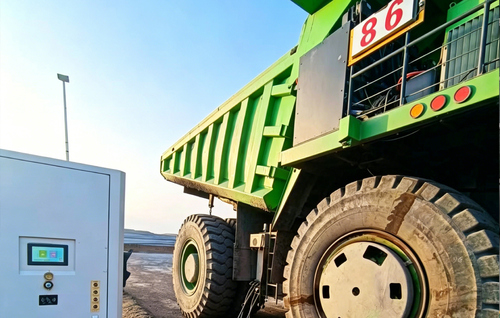
Lastest company news about High Voltage Water Heaters for Commercial & Heavy-Duty Electric Vehicles
High Voltage Water Heaters for Commercial & Heavy-Duty Electric Vehicles
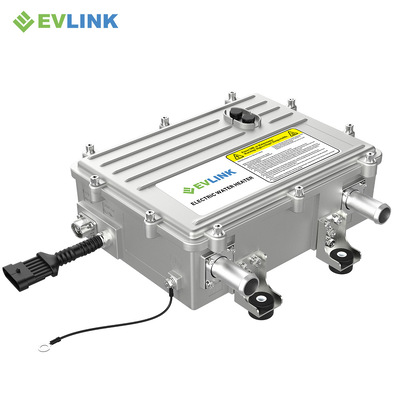
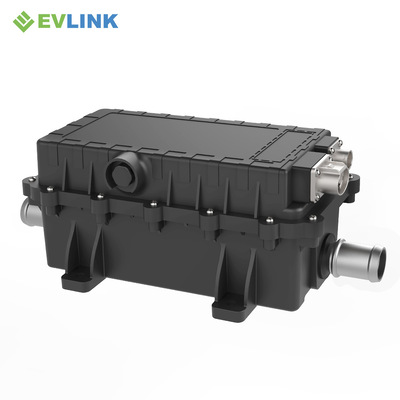
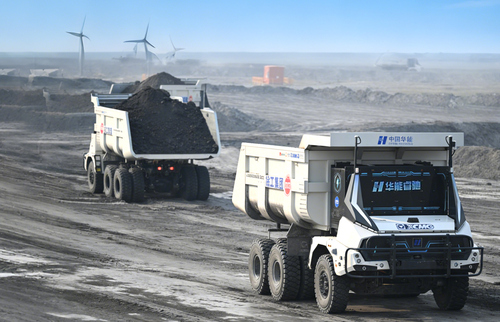
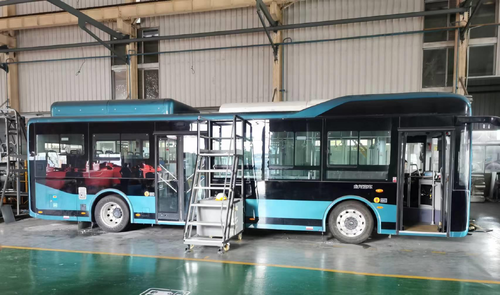
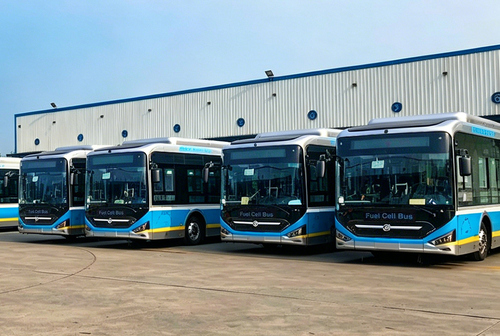
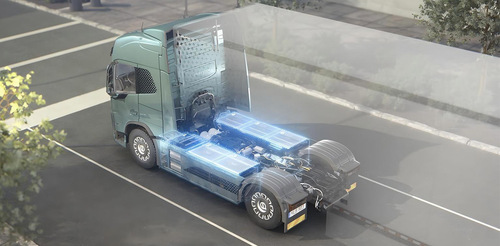
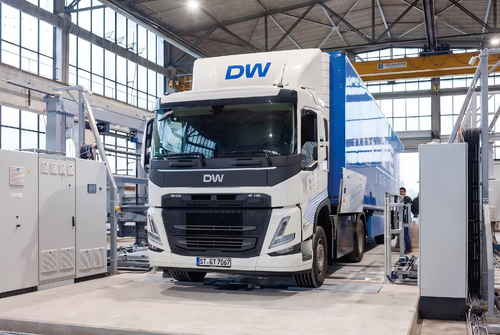
High Voltage Water Heaters for Commercial & Heavy-Duty Electric Vehicles SEO Keywords: High Voltage Water Heater, Electric bus heater, Heavy-duty EV thermal management, 10kW coolant heater, electric truck heating system, HV water heater. H1: Scaling Up: High Voltage Water Heaters for Electric Buses and Trucks While passenger EVs garner the most headlines, the electrification of the commercial sector—buses, trucks, and construction machinery—is proceeding at a breakneck pace. These heavy-duty vehicles have vastly different thermal requirements compared to a sedan. They require massive amounts of thermal energy to heat large cabins and condition massive battery packs (often exceeding 200kWh). This is the domain of the High Voltage Water Heater designed specifically for heavy-duty applications. H2: Power Requirements: The Need for 10kW+ Solutions A standard 5kW heater is insufficient for an electric city bus opening its doors every few minutes in winter. Scalability: Heavy-duty High Voltage Water Heaters are often designed in modular formats. A single unit might offer 7kW to 10kW, but they are engineered to be daisy-chained. It is common to see 20kW or even 30kW systems comprised of multiple units working in parallel. High Voltage Range: Commercial vehicles often operate at higher voltages to reduce cable weight. Heaters for this segment must often support up to 900V or 1000V DC inputs natively. H2: Robustness and Durability Factors Commercial vehicles operate in harsh environments. A High Voltage Water Heater in a mining truck or a delivery van faces constant vibration, shock, and potentially corrosive road salts. Vibration Resistance: Unlike passenger cars, heavy-duty components must often pass 5G or higher vibration testing profiles. The internal electronics and ceramic elements must be potted or mechanically braced to survive 500,000+ miles of service. Serviceability: Commercial fleet operators value uptime. High-end water heaters for this segment feature diagnostic CAN messages that can predict failure or alert maintenance teams to reduced flow rates (indicating pump issues) or scaling (indicating coolant degradation). H3: Battery Thermal Management in Heavy-Duty applications For electric trucks, the battery is the most expensive component. The High Voltage Water Heater plays a crucial guardian role. Cold Start: In freezing temperatures, a large battery pack cannot accept regenerative braking currents. The heater must rapidly bring the pack up to temperature before the truck begins its route to ensure full efficiency. Uniformity: Heavy-duty heaters often feature high-flow designs to ensure that the coolant temperature drop across a large battery pack is minimized, keeping all cells at a uniform temperature. H2: Strategic Sourcing for Commercial OEMs When selecting a High Voltage Water Heater for a commercial platform, consider the following: Multi-Voltage Capability: Can the same heater SKU be used on a 600V bus and an 800V truck? (Wide input range). Lifecycle Cost: A slightly more expensive heater with a lifespan of 20,000 hours is cheaper in the long run than a unit that fails after 5,000 hours, causing vehicle downtime. CAN J1939 Compliance: Ensure the heater communicates using the standard commercial vehicle protocol (SAE J1939) rather than passenger car standards, simplifying integration. The heavy-duty sector demands heavy-duty solutions. The specialized High Voltage Water Heater is the robust thermal engine enabling the electrification of global logistics and public transport.