| Brand Name: | EVLINK |
| Model Number: | Q-Series |
| MOQ: | 1 SET |
| Price: | $1200-1500 per set |
| Payment Terms: | T/T |
| Supply Ability: | 100 sets per 2 weeks |
|
|
|
| Insulation Resistance | ≥100 MΩ at DC 1000V, high-voltage section |
| High-Voltage Protection | Overvoltage, undervoltage, overcurrent, short-circuit and overtemperature protection |
|
|
CAN communication, enable signal communication |
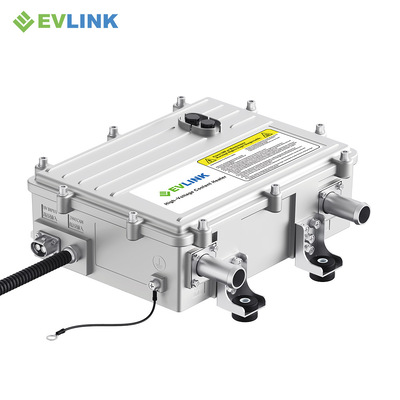
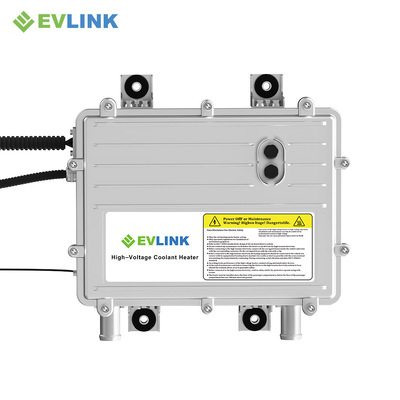
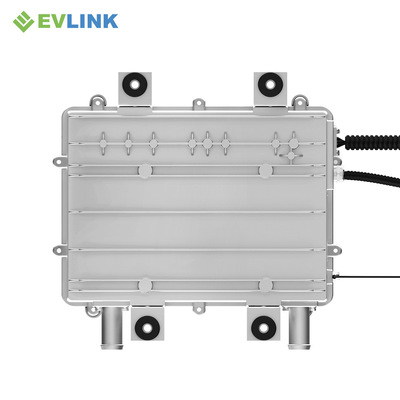
| Product Size | 346 × 268 × 123 mm |
| Product Weight | 12 kg |
Final specifications and protection thresholds should be confirmed according to the selected configuration and approved technical agreement.
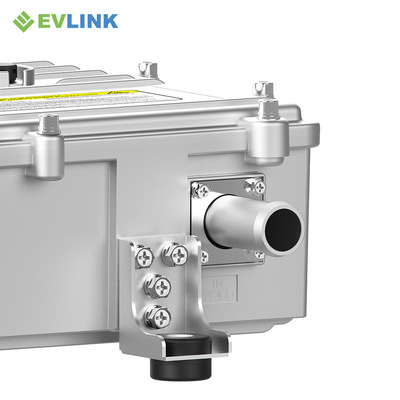
This high-voltage PTC coolant heater is designed to deliver thermal energy to liquid-based heating circuits in electric vehicles. By heating the circulating coolant, it provides a controllable heat source for compatible battery temperature management systems, cabin heating units and other vehicle thermal applications.
The required heating capacity depends on the thermal load, target coolant temperature, ambient conditions and system heat losses. Coolant circulation and heat-exchanger performance also influence the amount of useful heat delivered to the intended destination.
For optimal application matching, the heater rating should be evaluated alongside the vehicle’s thermal demand, electrical supply characteristics and operating conditions.
![]()
The heater can be integrated into compatible thermal management systems for electric buses, commercial trucks and construction vehicles. Engineers should evaluate vehicle voltage, thermal demand, coolant compatibility and installation requirements before selecting a suitable configuration.
It uses electrical power from the vehicle’s high-voltage system to heat circulating coolant. The coolant can then transfer heat to the battery system, cabin heat exchanger or another approved thermal circuit.
No. It is intended for projects with relatively high heating demand. The correct configuration depends on operating voltage, required heat output, coolant conditions, installation space and control requirements.
It may support either application when the vehicle coolant architecture and control strategy allow it. Some vehicles use separate circuits, while others use valves or a shared thermal loop.
Please provide the vehicle type, operating-voltage range, required heating power, coolant type, expected flow rate, inlet-temperature range, installation space, connector requirements and CAN communication requirements.
Project-specific requirements can be evaluated after the installation drawing, packaging space and electrical interface are provided. The final configuration should be confirmed in the approved drawing and technical agreement.
Send us your voltage range, target heating power, coolant conditions, flow rate, installation drawing, control requirements and project quantity. EVLINK will review the information and recommend a suitable configuration for technical confirmation and quotation.